Showing posts with label Microsoft. Show all posts

Monday, February 6, 2017

Depth Idea about Web Content Management Systems and their comparison

INTRODUCTION

The content management system provides the easy and user friendly content for the editing of web page and other operations. The Content management system one of a type of Enterprise version 2. This provides support and easy access to the editor who has less knowledge of web technology. It is used in different sectors like business, commerce, online shopping and many other applications. The main advantage of content management system is that it doesn’t require advance knowledge of web and provide environment to do different operations on the contents.
The organization requires content management system for the intranet network. The new concept is going to be implemented into the organization replacing old system of web technology. The existing system of organization has good CSS-based web that consists of all the department. The purposed system that the organization need the engineers to implement is the modern content management system. This report analysis all the possible services that can be implemented on this sector of the organization providing the maximum benefit to both the organization and the customers.
One of the effective web concept is content management system that can be used in the intranet network of the organization. This technique of web can be used and maintained by the organization with all effective and necessary requirements.

1.1      Overview

The report on the content management system covers all the systems on this latest web contents technique that are being used. This report includes the overview of all the system that could be implemented in the organization. The interface that is being used is central. The operation that the content management is that it provides the option to delete, edit and upload other contents on the network. The features of content management system is that it can be done offline as well. The older version required internet and the server was located to a separate place.

1.2      Requirement Analysis

1.2.1    Problem Definition

To analyze the organization’s existing system and replace it with the latest version of content management system.

1.3      WEIGHTED SCORING MODEL OF SYSTEMS

The weighted scoring model is one of the way to determine that changes are required for the betterment of the organization. This scoring model is given to the employee and the rating is being fix for the prior implementation of the changes which are to be made. The field that are over rated need to be implemented with good investigation. It is the indication that which field of the organization isn’t functional and requires to be modified. The team decides to take the feedback from the employee and get is on the ratting card that is being in the table below. The table contains of evaluation criteria that is the part of organization web.
TABLE:

Evaluation
Criteria
Ratting
Description of the criteria
Weightage in percent
Share
Point
Open source

Proprietary Software

1
Hardware Requirements
10
New systems
35
7
6
5.6
2
Software and license Requirements
3
License of software.
30
8
7
3.2
3
Design of the system
Requirements
5.3
Modification on existing design
20
3
8
9.8
4
Charges regarding Maintenance
4.9
To replay the damaged ones and old systems.
5
7
5
1.6
5
Architecture of new design
8
Hiring new crew for the deployment
10
8.5
7
2.2


Total value and percent
100
23.5
33
22.4
Table 1 - Scoring model (weighted)

1.4      SYSTEMS FOR CONSIDERATION

CONTENT MANAGEMENT SYSTEM

The content management system is being used widely. The CMS are being used to manage and facilitate other contents and creation. There are different type of content management system that provides the organization flexibility of providing and editing content on the page. They are as given below:
·         Open source
·         Software as a Service(SaaS)
·         Proprietary Software

1.4.1    OPEN SOURCE:

This open source are found over internet and can be edited and managed. The open source gives wide range of option. The open source are being maintained by the developers all over all world for free. These source are available on the internet for everyone and with variety of options. These software can be hosted by anyone. These software are hosted by the user and the servers. The hosting is not found to be free but the software are free. There are many open source platforms. They are as given below:
·         Word-press
·         Joomla
·         Drupal and
·         DotNetNuke
These are one of the most used open source software for the web content. The software that provide various options and facilities are being given. The word press is found to be one of the most used open source web content management system. There are different issues with the open source and they are as given below:
·         The website that are being built on the open source  are not free but found to be much cheaper than other services
·         Other support are not found like in other systems.
·         The design cannot be moved to other CMS.
·         It might bring insecurity.
Few of the example of open source content management system are as given below:
Word press
This was started decade ago with the idea of making the content management system available for everyone without any restriction. This gives millions site in today’s word to present itself in the world. It is found as open source project all over the world and are used for the websites providing freedoms in different sectors. The content management system is used for the blogging system and other plugin and widgets as well as themes. This provides on limitation and restriction and can be edited to any extent by own.
Joomla
This is content management which is also found online for free and gives the build function for the web designing and for other powerful applications. It is found to be most easy to use and provide variety of options on creating the site.  The Joomla is used for making different websites like corporate websites, corporate intranets and other online reservations. This framework provide easy to build functions for inventory systems, complex directories regarding business and other application bridges.

1.4.2    Proprietary Systems

These proprietary system are available in different variety that are being provided by the software developers. The content management system are being created by these organization. This has been taken over by the open source solutions that has advanced the Content management systems. There are many issues in this system that include the organization. The organization are responsible for the development of these systems targeting the particular users. All responsibility about the website is taken by the organization that develop the system. These systems need to be updated with time and it is done only by that particular organization. These organization has trade mark over the product. These production are good for the organization only if these following are present:
·         The presentation on the online is more important and has to focus the specific business.
·         The functionality of the organization require more of the presentation and the other fields
·         The design of the system is more focused rather than other fields
·         The design of the content management is more important rather than the development of the software and its maintenance by own.
·         All the responsibly is carried out by the software developing organization.
The key issues are being given and considered while choosing this system of content management system. These key issues are as given below:
·         The company that develop these software might vanish with time but it is required by use that the system works properly with good function.
·         The ownership of the product should be handed over to the organization.
·         These content management system become old with latest technology and all required to be updated and made up to data with the time.

1.5      Share point

The share point is one of the most used content management system by the organization. It provides number of facility for the users and gives a wide range of options. This is used to build intranet and used for building workflow on the organization that include documents and other management systems. The share point products are being used for different other purposes including web content management system. The products that are being used as the share point are as given below:

Figure 1 - SharePoint

1.5.1    SharePoint Online

This is cloud based hosted service by Microsoft itself giving a wide range of business help for the organization. The different size of business is being facilitated by this online SharePoint service. This is like a subscription package provided for the organization for the standalone online service. The SharePoint are used by the organization for sharing documents with the colleagues, partners and customers.

1.5.2    SharePoint Foundation

This is SharePoint foundation that are found to be free for the organizations. Many different sites are found to be created by this SharePoint foundation.

1.5.3    SharePoint Server

The organizations are provided with the Microsoft servers that has many facilities including SharePoint Foundation. There are many more services provided by this server for the organization. They are business intelligence, enterprise search and other Newsfeed.


Literature Review:

The organization are provided with different options for the development of its site and intranet based applications. This can be done using number of content management services and framework. There are different types of content management with number of advantages and disadvantages. There are different type techniques that are being discussed on this report

Literature survey

The different authors that share the technique are being well studied and discussed. There are different types of content management system that are being provided by different sources with number of facilities. The SharePoint provide different type of features. These features are as given below:
·         Cloud
·         Intranet and web content management
The solutions that are open source like word press are being used by number of organization with different sizes. They use number of languages and provide different templates. These templates are being used for the development of the systems. The content management system are being featured like being Scalable and other external supports. These content management systems are made easy to use for the developers as the users providing external supports and other issues. 


ANALYSIS

The analysis of the system that is being chosen by the organization is done. There are different type of users and they require different things from the organization. The investment of the organization for this new system is being done on the basis of cost benefit analysis. The organization needs to be well organized by the content management system. Let us view the cost and benefits from the system that can be used for the organization. They are as given below:

3.1      Cost and benefits

The cost and benefits of the system are being implemented for the particular system that is being chose by the organization. The organization choses the SharePoint for the development and deployment of the system. The cost that is being invested by the organization is 50,000 $ as whole and does expect for the benefits. The total cost of the investment is being taken into account and the ownership as well.

Cost invested for the SharePoint


SYSTEM
COST
1
Deployment of the new technologies including systems and hardware
21,000 $
2
SharePoint server center
10,500 $
3
New hardware for admins
9,000 $
4
Workstations
5,400 $
Total
45,900 $

Table 2 - Cost Analysis for the SharePoint

Benefits

The benefit analysis is being carried out and is expected by the organization that will be bring proper balance with cost. The table below give the benefits of the cost that are being invested on the SharePoint content management system.


DESCRIPTION
BENEFIT FROM THE SYSTEM
1
Benefit in performance of employee with the new systems
32,000 $
2
Benefit from the design and increase in customers
24,200 $
3
Productivity of the system and the design
14,000 $
4
Service and the increase in use of products
4,400 $
Total
74600 $
Table 3 - Benefit of the product and cost invested

Implementation Plan


The project are being implemented for the SharePoint. The implementation requires number of methods and procedures that are being followed by the organization. They are as given below:

4.1      Sponsorships

It is necessary for the organization to get the sponsorship for the benefits of using the service. This makes good and cost benefits analysis for the implementation of the SharePoint in the organization. The benefits of the SharePoint use isn’t well understood without the Sponsorship of the products. This gives great benefits to the organization.

4.2      Goal

The implementation is found to be easy if the goal of the organization is well understood. Hence the goal is being kept in first priority on development of the system and implementation of SharePoint. The goal and vision of the SharePoint for the organization is being well created and understood. 

4.3      Management

 The commitment is being created for the governance of the SharePoint. The management of other different sites are being followed that include environment sites and other technical maintenance.

4.4      Team

The team for the implementation plays vital role in the SharePoint deployment for the organization. The skilled and well managed team could give better set up of the SharePoint in the organization. The skill are required for the implementation of SharePoint that include building of SharePoint team.

4.5      Strategy

The implementation strategy has to be well planned and the team leader handles all the planning.

4.6      Defining of Service Operations

This is undertaken for the well monitored SharePoint environment and that creates ease for the users. The services are well defined by the help of organization admin ad other policies are being fixed.

4.6.1    Operations for the self-Adapting SharePoint

The self-adapting SharePoint provides number permission and other templates for the content managent system and its implementations.

4.7      Architecture

The architecture of the information are being well managed and understood that are required by the employee of the organization. The architecture of information is focused in this system.

4.8      Policies

The policies of the SharePoint should be fixed for the end users and the organizational level.
Keeping the SharePoint simple
The most important is making the system as simple as it could be. The system of CMS shouldn’t go to the complex level. With the simple SharePoint, it is easy to understood and develop.

Grant chart


Figure 2 – Grant chart

Risk Assessment Plan

The assessment plan for the risk is essential for each and every organization that gives a well knowledge about the risk. There is always risk in the every aspect of the business and the organization and therefor the proper risk assessment planning should be carried out by the organization for the SharePoint. The risk analysis of this project can be carried out number of approach. They are as given below:

6.1      Identifying risk involving in the project

The risk identification is the first task that is carried out by the organization in order to make it secured from other problems. There are different types of risk that are found on the project. The proper review is understood and make from the employee. These are categorized into number of risk involving deploying of the SharePoint. The task that are made to be done for the each and every developer as shown in the grant chart are to be reviewed and well understood by the risk analyzers.

6.2      Categorizing risk

Each and every risk that are identified are being categorized and well documented with the level of 3. These level of risk could determine the risk faced by each and every module that are as given below:

HIGH

MEDIUM and

LOW

The risk are rated in these three values and are made to make understandable to the developer about the risk faced on the organization. This is done before the implementation of SharePoint providing the likely hood of the risk that could occur during and after the deployment.

6.3      Risk management

The certain risk that are less likely to occur could being problem in the implementation of SharePoint after or at time of deployment. The necessary steps are already documented and are even made for the risk that could occur even it low or of high priority. The organization could face number of problem when any kind of risk is occurred.

6.4      Risk monitoring

The risk that are likely to occur and are documented are being well monitored and understood by the organization. The risk on the implementation of SharePoint is made to be understandable for all the employee and necessary policies are followed for those risk not to occur. 

CONCLUSION


The organization that is implementing the new content management system is provided with the SharePoint solution. Well analysis of other system are being understood and compared with the SharePoint that are open source like word press. These open source are found to be one of the most used and free service given to the users all over the world. Although, the system are well in many issues the SharePoint has a lot more benefits and is implemented on the organization’s intranet where the employee doesn’t require much of knowledge about the web technologies.  The SharePoint is found to have minimal risk as it is all based on Microsoft and they are responsible for providing the services. In addition, the SharePoint provides the transfer of old design of the web to new web content management system. 

Depth Idea about SharePoint(CMS) along with case study

Introduction

The content management system is one of the application that are used for the purpose of editing, publishing and maintaining the contents over the internet, intranet and extranet as well. It provides central interface to the editor and admin. This helps in the management of work that is undertaken under the collaborating environment. This content management system is based on the CMSs that are used for the logging and other web sites that implements. The enterprise content management system are designed by the organization that are mainly focused on the customers. These content management system has number of function and are well organized for doing different organized operation like editing and deleting the contents. The report is mainly based on the development of content management system offered by Microsoft that is SharePoint. Similarly, the web content management system is used for the web pages that are maintained by different company. It can be standalone application for the web page content management system.
The organization is required to have content management system. There are many options for the organization to implement content management system. As the organization has already being implementing web site. The intranet is used in the organization. There is good CSS-based pages already being implementing in the organization.

Overview

The project is to implement the content management system in the current organization. This content management system provides the flexibility to the organization. The report gives the analysis of the all the types of content management system that could be implemented in the organization. The function of all the other types of CMS including SharePoint is checked for compatibility at the current situation. The organization is also planning to provide additional basic training for the employee to implement the new content management system. All the latest CMS that are being implemented nowadays are taken into account and is compared with each other in order to determine the best content management system for the organization.

Weighted scoring model

The weighted scorning model is developed to understand the pre requirement of the organization. This can be done by using different criteria for the organization are most required and is scored with the number of content management systems. The criteria that could be taken into account in order to determine the best content management system are as given below:

The functionality of content management system

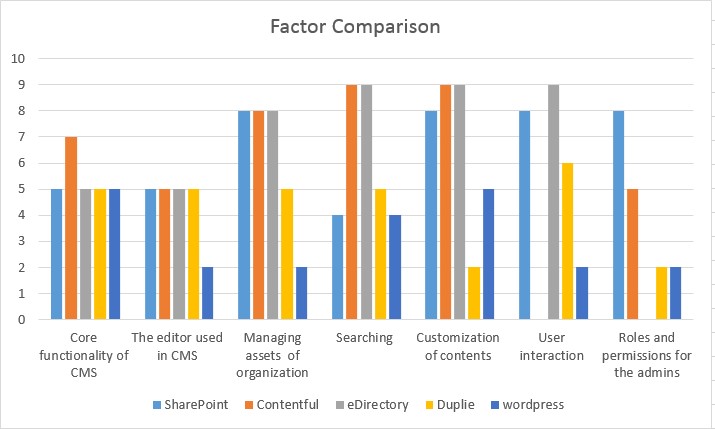
The core functionality of content management system is one of the most important assets for the organization. The organization mainly focus on the functionality that is provided by the chosen content management system. The basic functionality of the content management system. There are different activities that can be completed by the content management system and the organization needs to use all those functionality and activates. Some of the content management system doesn’t have such functionally that are required by the organization and hence it is necessary to have through knowledge of these content management systems.

The used editor for the Content management system

It is found that number of content management system use WYSIWYG. “What you see is what you get” is a phrase for WYSIWYG. The editor is used for posting the contents on the site.

Figure 1 - Editor for content management system

Managing assets of organization

These CMS are capable of handling the assets of organization that are the image and many number of content providing information. These information are vital for the organization is consisted as the assets. The content management should be chosen that can handle all these assets for the organization in most advance manner.

Searching for the contents

The most important activities that are undertaken is searching for the particular content in the site of the organization. The content management system are consisted in the basis of search speed and many other factors. The searching option is considered most for the organization.

Customization of contents

The content management for the organization has to provide flexibility with the customization of design and the content that are being published. It is found that the organization requires the content to that should be well customized with the design.

User interaction

The user interaction is considered the most for the organization as it provides the information that is important for the company. The user interaction deals with the feedback and the ratting for the organization. There could be number of user interaction that can be implemented for the organization. The organization requires interaction with the users for the content and the product that are being provided.

Roles and permissions

The organization requires to implement the content management system that could provide permission and roles for the editor and give many other permission. The roles is divided into number of members that has permission for the editing of the contents.

Figure 2 - Weighted Scoring Model

Figure 3 - Total scores

Figure 4 - Factor Comparison

Figure 5 - Overall score


Content management systems

There are many options for the organization to implement a content management system. These content management system are found to be a lot useful in different aspects. They provide different features and organization has to choose one of the content management system according to the need and requirement. The content management that are considered for the organization are as given below with the features they include from each other. The content management system that are present and is implemented by different organization are:

Open source content management system

The open source content management system is available over the internet for free and doesn’t cost anything. These open source content management system have number of feature and are found to be used at the high rate in today’s content management system market. They provide flexibility with the design and other features. These content management system provide number of options for handling the content that could be posted and used for the organization. The feature of the open source content management system are as given below:

Profit is locked in

The cost of the content doesn’t cost much. The benefits of using the open source content management system is that it can be codes and changed by the other developers as well. When choosing the proprietary content management system, the organization is provided with very less option for switching the company as the basic coding is with the company that develop the site. The open source give all the freedom to the organization.

Updating

The open source CMS are found to be updated frequently. There won’t be cost involved in updating to the new open source but few of designing is required. The word press which is being frequently used by the developer as the open source platform of developing the sites. The updating to the new style is found to be free of cost in the open source.

Customization

The open source provide good customization with the content that are used for the organization.  There are number of customization option in the open source content management system. The open source provide the template for the different types of design that reduces the effort for the designer as well. There are number of plugin that are implemented for different features which organization can use. The open source like word press come out of the box and the designing for the designing and maintaining of the contents.

Security

There could be security issues as there content management system’s coding are found and can easily be accessed. The code could be used to understand the vulnerability in the designing of content management system of the organization. The open source content management system could be made more secured by the developer as the codes are available for the editing purpose.


Proprietary Systems

The proprietary systems are provided by the company that design the whole system of content management system. The developing company provide all the managing tools that are required by the organization and cost it accordingly. This company take the organization as the client and provide the necessary services on the basic of the package for the content management system. The company provide all the function to the organization with necessary assistance. The whole system design and coding is handled by the developer company and they give the features of troubleshooting and other implementation. The security and other measures are taken into account by this company and makes accordingly gives the services to the customers. Unlike open source the whole package is cost and for a period of time all activates and the necessary changes that could be done on the CMSs are handled. The Proprietary systems are found to be much costly for the implementation of content management system. These content management systems could vary from company to company and their policies. The required design are full filled by the company as per the organization’s choose. The license fee could be a great costly for the organization and it lacks to compute with the open source. The developer are given the more priority as they organization’s content management is purely depended on the developer.

SHAREPOINT AS Proprietary Systems

The SharePoint developed by Microsoft can be used for the web content management system. This provides much more function than another content management systems. This also give the facility of applications and enterprise collaboration platform of number of features. The SharePoint server publishing infrastructure is used for the development of the web based content management system. There are number of features one of them is page library where the pages could be stored and handled appropriately. The folder could be created for the storing purpose of the content that are to be published on the site. These library provide the features of publishing as well. The SharePoint make the used of tree structure for the organizing of the contents. Similarly, the sites are also organized by the SharePoint.

Architecture of information on SharePoint

The sites are arranged accordingly on the tree level for the publishing of the organizational information on the web. The architecture of the information plays an important in the organization’s contents. The hub page is decided from the each pages that can be called as the landing page. The page library are arranged with the other pages as well on SharePoint. The pages that are being published has its code that are stored in the page library of the main page. There is no build in features for the URL assigning and this could create problem. 

Architecture of the contents

The organization has number of different pages that are to be published on the internet. The layout is prepared for the each and every page that are to be published on the behalf of the organization web page. The content management system’s page layout of the SharePoint gives the area that can be used by the authors to publish their content for the organization. There is a great requirement of the planning before designing and implementing of the pages on the SharePoint.

Security

There is great security issues for the site that are made public. The SharePoint gives a wide range of security for the contents on the web. The well managed security is required for the organization and the SharePoint could be made to adopt the security.

COST BENEFITS ANALYSIS

The content management system is chosen from the weighted scoring model and the score for the SharePoint is found to be high hence it is implemented in this project and the reporting. The organization that requires the content management system is able to invest an amount of 20k USD for the new content management system. The total investment is analyzed accordingly on the cost benefit basis. The cost benefit analysis is performed for the implementation of SharePoint on the organization. The cost for all the system are estimated with its benefits in certain interval of time. These cost involve the system cost and the benefits from it. The cost of the implementation of the SharePoint content management system are as given below:

Systems
Cost of the systems
Development Cost
One time investment
5,000 $
Personnel Costs
1,000$
User time
2,000 $
Training cost
3,500 $
Fixed costs
SharePoint cost
1,500 $
Variable costs
System cost
5,000 $
Maintenance of the system cost
1,500 $
Total
19500 $
Table 1 - Cost benefit analysis table
The above table describes the cost benefit of the organization implementing the content management system. The investment of the organization is utilized properly in the system of SharePoint. This gives the organization estimation of the cost that are invested for the implementation of the project. The cost given has the payback period. The benefits are identified by the implementation of the SharePoint. The benefits are achieved in certain period of time that is payback period. The payback period for the implementation of the SharePoint is 4years. The formula is used for the calculation of payback period (T).
Payback Period (T) = Development Costs (D) / (Annual Revenues - Annual Operating Costs (P))

Implementation of SharePoint

The SharePoint is implemented for the organization keeping the benefits as the primary measure. The methods and many steps are involved for the designing of the SharePoint. They implementation of SharePoint requires the following:

GOAL of the organization

The primary and most important is the goal before developing the content management system. The goal of organization should be fixed in order to achieve that the organization really want. The organization requires the old webpage to be used for the new content management system that can be early done with the help of SharePoint. The content permission should be fixed for the different authors.

Managing the contents

The content of the organization should be well management and categorized before the development. The understanding of these content management and the content should be published in the particular. The contents are the assets of the organization that should be handled properly and published.

Team for deployment

The team should be well managed and they are provided by the roles. The implementation of the SharePoint is carried out by the well organized and well trained professional. The well management team are responsible for the good deployment of the SharePoint.
Strategy of the organization
The strategy of the organization is taken into account for the deployment of SharePoint. The well management strategy is taken into account and they are as given below:
·         The new systems are brought and are fixed on the organization
·         The implementation and the design of the SharePoint is undertaken with the collaboration and through investigation of the requirement of the organization.
·         After deployment well testing should be performed for each and every module of the project
·         The content and the permission should be well tested with the strategy.

Grant chart for the implementation of SharePoint


Table 2 - Grant chart

Risk Assessment and planning

The risk planning is undertaken for the project of SharePoint in the organization. The project should be well handled that is SharePoint implementation. The analysis for the project is taken into account for the SharePoint. They are as given below:

Identification

The identification of the risk is done using collection of information from the previous project and the research for the organization. The risk could hamper the organization in great extent. The content that are published on the behalf of organization carries vital information that should be well managed. The risk could be found anywhere in the organization. The documentation of the risk is done using identification and the well analyses of the SharePoint as the content managed system for the organization.

Risk prioritization

The risks after identification are well prioritized in order to determine the involved level of risk. The risks are made to be assigned in the level of 3 that are high low and medium. The risk which has high priority are taken as the most important and handled at the top level. The risks are documented by the analysis team as high medium and low. Low level risk are taken less consideration as they are less likely to occur.

Management of risk

The risk that are assigned as the high are taken as the most dangerous for the organization and it is handled properly. The management of the risk is done by using different preventive technique and its implementation. The most important task is to manage the risk involved in the organization. Similarly, the monitoring of risk is also one of the important factors to determine the success of the project.

Conclusion


The SharePoint is found to be one of the best option for the organization. The SharePoint gives payback period faster than other content management systems. There are many content management system that are found to be compatible for the organization in implementing the content management system as well. The organization requires a SharePoint content management system to be used for the publishing and editing the content. The different level of permissions are provided for the admins which are assigned in the basis of content and level of the content publishing. The manager are given the right to access all the content whereas the other employee with other department are given access to the certain content of the organization. The content management system is easy to use and is found to be implemented in number of organizations all over the world. The SharePoint provides number of features that are thoroughly analyzed and its benefits are well understood by the report. The older design of organization converted to the newer one.